Lecture 2 Summary: Sheikh Salim Yusufali

In: General, Lecture Summaries

14/12/13

•    The topic we are covering is practical advise for Muslims in a minority from the Ahlul Bayt (as) from teachings which are relevant to our situation, living with non-Muslims.

•    We should try and benefit from lecturers/ scholars; the minbar is one way of communication. We should also benefit in a less formal environment and try to make the most of these opportunities. Sometimes what we hear is repetition but we shouldn’t perceive that as a negative, it can be treated as a reminder and that can encourage us to practical application.

•    We should also partake emotionally in these majalis the best way possible. They are a source of Barakah (blessings) and we are strongly advised by scholars to try and mourn on the Masaib (gham) of Imam Hussain (as) and his family in whatever capacity.

•    There is a hadith of Imam Ali which is found also Nahjul Balagha and other sources which is advice to Malik Ahtar (a close companion) on the governance. He guides Malik to feel love in his heart for the people and not to act barbarically. He further says that people are of two types: either your brethren in faith and or peer in humanity/creation

•    This hadith clear shows that there is a level of respect one earns just by being a human being. There is a principle of Ahsan (kindness) and A’dl (Justice) for all humans. 6th Imam witnessed a man insulting a person of another religion and rebukes him as that religion is worthy to him

•    Holy Quran mentions about those that come from of different religions that if they are not an enemy than you should treat in kindness and justice and Allah loves those who are just

•    Justice is part of innate and core beliefs especially as Shias and this should be looked at material and spiritual level. The common idea is that if I am not causing injustice physically to others then that is enough, but there is a higher level of injustice as well and that this doing injustice to oneself

•    We perform injustice to ourselves when we follow our base desires without regards to the Shariah and there is always a battle going on between the Aql and the base desires. Committing sin doing is injustice to own self.

•    There is a difference between a brother in faith and a peer in humanity but we should have friendly relations to all

•    Holy Prophet (sa) in Medina lives with different tribes and different religions and was able to have a working relationship with all of them but still is able to preserve the Muslim identity

•    We also need to take care of people with whom we have close relationship. One of the main criteria of choosing close associates is that they are not performing injustice (both material and spiritual) and also not supporting it

•    Holy prophet (sa) said famously that whoever wakes up in the morning and is not concerned over the affairs of Muslims is NOT A MUSLIM. Hence we should have a special affinity to a Muslim and we should care for them irrespective of their geographical location

•    Sometimes the injustice we perform is in the choice of careers. If we are choosing a career that is not helping the cause of justice, at least we shouldn’t choose something that is going to increase injustice. Also, don’t compromise your religion for wealth and go against your principles. For e.g. avoid being involved in the system of interest and advertising of haram material or alcohol.

By: admin

Friday Khutbah – Stanmore – 29th November 2013 – 24th Muharram 1435 – Summary

In: General, Lecture Summaries


These supplications of Imam Zayn al-Ábideen (A) help us understand the spiritual and inner dimension of Islam and our relationship with Allah (swt).

Three lines from Du’a Makarim Al-Akhlaq :

I should like to quote briefly three lines from Du’a Makarimul Akhlaaq,  Du’a No. 20 in SahifahAl-Kamilah. This is one of the most beautiful dua’s which we normally recite on the 23rd night of the month of Ramadhan.  It is a du’a about the noble moral traits and those acts which are pleasing to Allah (swt). Imam supplicates,

(Allahumma salli ‘alaa Muhammadin wa aalihi ; wakfini maa yashghalunil ihtimamu bihi.)

‘’O Allah, bless Muhammad and his household ; Keep me Occupied with those things which in your estimation are important.

 ‘’Wast’amilni bima tas-aluni ghadan ‘anhu’’
‘And employ me in that about which You will ask me tomorrow.’

‘’Wastafrigh ayyami feema khalaqtani lahu’’
‘’and let me pass my days in that for which You have created me.’’

Let us expound on these three verses. 
‘wakfini maa yashghalunil ihtimamu bihi’

Keep me occupied with what is important to me, that is, something useful that I put some effort into cultivating. For example when you grow a plant you have to take great care in nourishing it by watering it and making sure that it is trimmed and receives enough sunlight. This is ‘ihtimam’, anything that blossoms after putting in efforts and attention.   

In other words the Imam is advising us to keep ourselves occupied in doing those things which earn the pleasure and ‘ridha’ satisfaction of Allah (swt).  Our constant and continued struggle in life must be for the sake of earning satisfaction of none other than Allah (swt). 

Anyone who has only one concern, one desire in life and that is, to do anything and everything sincerely for the sake of Allah (swt), Allah (swt) will fill his heart and make him so contented and independent that he will no longer need to seek any help, comfort or confidence from anyone except Allah (swt). This is achieved by those people who have resolved in their life that their only direction is to Allah (swt).

Then Imam says,

‘’wasta’milni bimaa tasaluni ghadan ‘anhu’
‘’Employ me in that about which You will ask me tomorrow’’.

What does it mean about that which we will be asked tomorrow? According to our ‘ulama’ we will be asked about two things only, about things that we have done and those things which we have failed to do. We will be asked about what we did in all these years of our life that Allah (swt) has given us. Did we serve God’s creation?  Did we help the poor and the needy? As Shias, what have we made of the Book of Allah and the ‘seerah’ and the ‘sunnah’ of the Prophet and the A’imma (A)?  Have they had any effect on our life?  How have we treated our parents, our wives, our children and our fellow human beings? 

These dua’s are a journey of exploration, a journey of self-analysis, a journey which involves transformation, a journey of our life, of where we came from and where we are heading to, what steps must we take in order to arrive at the destination required by Allah (swt), a journey which ultimately ends with success and salvation.  

‘’Wastafrigh ayyami feema khalaqtani lahu’’
‘’and let me pass my days in that for which You have created me.’’

That is, let every day of my life be a testimony that I have fulfilled the purpose of my existence in this universe which is to serve none other than Allah(swt) as Allah says, ‘wa maa khalaqtul jinna wal insa illah liya’budoon.’  ‘I have not created jinn and men except that they may worship me, they may serve Me.’(Surah Az-Zaariyaat – 51:56).

Let us see what Imam Redha (A) says about worship ‘ibaadah’. He says,

‘’Laysatil ‘ibaadatu kathrata-s-siyami was-salaati’’
‘’Worship is not about fasting or praying much’’

‘’wa innamal ‘ibaadatu kathratu-t-tafakkuri fi amrillah’’
‘’Rather worship is to reflect much on the affairs related to Allah(swt)’’

(Tuhaf al-‘uqool, p. 442).

What is important is to reflect upon the purpose of our existence which is to fulfil the commands of Allah(swt) according to the Holy Qur’an and the teachings of Ahlul Bayt (A). 

In Surah Al-Imran, Surah No. 3 Ayah No. 191. In this Ayah, Allah (swt) describes those people who have understood and fulfilled the purpose of their existence. 

‘’allazina yazkurunllaha qiyaman wa qu ‘oodan wa ‘alaa junubihim wa yatafakkaruna fi khalqi-s-samaawati wal ardhi’’
‘’Those who remember Allah standing and sitting and lying on their sides and reflect on the creation of the heavens and the earth.’’

These people think deeply about the creation of the heavens and earth and so understand the purpose of their creation on this earth. They do not pass their time in useless pursuits and vain pastimes. And they say,

‘Rabbana maa khalqta haaza baatilan subhanaka faqina ‘azabannaar’
‘’Our Lord!  You have not created all this in vain.  Glory be to You; save us then from the chastisement of the Fire.’’

These are the people who with tears in their eyes call on their Lord with ‘’tadharruan wa khufyah’’ humility and in private (7:55) saying, ‘’You have not created this universe for no reason.  

Allah (swt) is calling upon us to live a meaningful life filled with good deeds.   Otherwise, we are ‘mayyitoon’ we are spiritually dead.  We are just carrying on in life that has no meaning and no purpose.

Imam Ali (A) put all his thought and attention to none other than Allah (swt). He said,

‘’maa ra aytu shay-an illa ra aytu-Llaha qablahu, wa ma’hu wa ba’adahu’’
‘’I never saw a thing but saw Allah before it, with it and after it.’’

Let us pray to Allah (swt) to grant us ‘tawfiq’ to understand the purpose of our creation and carry out the commands of Allah (swt) and let us end with a prayer of our Prophet(saw)

‘’Ilahi laa takilni ila nafsi tarfata ‘aynin abadan’’
‘’My God!  Do not ever leave me by myself even for a moment’’

(Bihar al-Anwar, Vol. 86, p.9)

Muallim Murtaza Bandali


By: admin

Friday Khutbah – Friday, 22nd November 2013 – 16th Muharram 1435 – Summary

In: General, Lecture Summaries

What guarantee do we have that we are going to be alive today. Go and visit the graveyards and see how many of our relatives and acquaintances whom we used to know and love have passed away. What is going to remain with us are our deeds that we have sent forth for the Hereafter. In Surah Al-Nahl (16:96) Allah(swt) says, “What is with you passes away, i.e. must vanish and what is with Allah i.e. the good deeds that we send forth to Allah (swt) will remain. Indeed, we shall give reward those who are patient according to the best of what they did.”

And in Sermon No. 238 in Nahjul Balagha, Imam Ali(a.s.) cautions us that we should collect provision for the next world by performing good deeds before our death. He says, “Perform good acts while you are still alive, and while the books are open (for recording your actions); while the sinner is still being given hope before the light of action is extinguished; and before the time expires and our life ends, and the door of ‘tawba’ is closed.”

Death is just a transfer from one home to another. On the Day of Ashura, Imam Husain (a.s.) said to his companions, “Death is nothing but a bridge over which you pass from this world of difficulties and distress towards a vast heaven of eternal happiness. Who amongst you does not like to migrate from the worldly prison to the heavenly palace?  And as for your enemies, it is like migrating from the palace towards the prison.”

Remembrance of death:
If there is anything that kills unlawful desires of our soul, it is remembrance of death. By constantly remembering death we are actually plucking out the roots of our negligence and preparing ourselves for the appointment with Allah(swt).  When you frequently remember death , your preoccupation with this fleeting world will diminish and the fire of greed will be extinguished.  According to Mulla Muhsin Fayd Kashani, the Prophet’s saying,  ‘’An hour’s contemplation is better than a year’s worship,’’ is very much about the  remembrance of death.  When a person contemplates about death his exaggerated view of the world is dissolved and he strives harder for the Hereafter.

The believers are those who remember death most and are the most prepared for it.  When the Prophet(saw) said,
“Increase the ‘zikr’ the remembrance for the demolisher of desires” he was asked “What is the demolisher of desires?”  He said, ‘death’

One way of reviving the remembrance of death in our hearts is to visit graveyards and attend the sick.

Categories of people :
People fall under three categories as far as remembrance of death  is concerned.

Those who do not remember death:
The first group of people are those who are  possessed by the comforts and the glitter of this world whose deeds are not good.  These are the ones who take death lightly as if they are exempted from death. They are the ones about whom Allah (swt) says in Suratul Jumu’a (62:8) “Say, indeed the death that you flee from will certainly overtake you.”

When our time comes to leave this temporal world, we cannot defer it by a single hour nor advance it

The second group of people are those who repent and remember death abundantly to instil fear and awe in their hearts. These are people who are always afraid that death might seize them before they have made the necessary preparations. They do not actually detest death or meeting Allah (swt).  Rather they fear they  have lost the opportunity to meet Him due to their failures and shortcomings in this world.

The third group of people are those who are not afraid of death.   Rather, they remember death continuously, for what is their utmost desire and wish is their appointment to meet their beloved, for the lover always desires to meet his beloved.  This group  pray to Allah (swt) saying,  “O Allah, keep me alive as long as life is ‘khair’ good for me, and take me away when death is better for me (Sunan Abu Dawood No. 3108)

Yet higher than this third group are those who entrust their entire affair to Allah (swt).  They love best what Allah loves best.  Their love and devotion to Allah(swt) brings them to the level of satisfaction with the divine.  They are the example of ‘’mootu qabl ‘anta mootu’’.  ‘’Die before  you die.’’

In Hadith Al-Qudsi, Allah (swt) says,

“I wonder how a person can be happy when he is certain of death.”
“and I wonder how a person who is certain of the Day of Reckoning (The Day of Judgement) but still  accumulates wealth.”

Where are the huge treasures accumulated by Shaddad, Fira’wn and Qaroon ? They have all left them behind and are themselves rotting in hell.

“I wonder at a person who is certain of going into the grave, but still smiles without concern.”
“I wonder at a person who is certain of the Hereafter and its Bounties but he still rests.”
“I wonder at a person who cleans him/herself with water, but does not cleanse his heart.”
“I wonder at a person who knows that Almighty Allah is aware of his actions, but still commits sins.”
“I wonder at a person who knows that he/she will die alone, go into the grave alone, give accounts alone, but is still totally engrossed with people who will not be able to help him/her.”

Ihtidhaar:
The period of time just before death is known as ‘ihtidhaar’ and the person who is on his deathbed is referred to as ‘muhtadhir’. It is recommended to help the dying person recite ‘’La ilaha illallah’ for Imam Ja’far al-Sadiq (a.s.) has said, “Whoever recites ‘La ilaha illallah’ during his dying moment will go to Jannah.” It is also recommended to help the dying person recite and understand the ‘kalimah’ and the names of the 12 Imams. It is also mustahab to recite before the dying person Suratu Yaseen, Surah Saffaat, Ahzaab, Ayatul Kursi, the 54th ayah of Suratul A’raaf,  And the last three ‘aayaat of Suratul Baqarah which starts with ‘Lillahi maa fis-samawaati wal ardh and ends with ‘anta mawlana fansurna ‘alal qawmil kaafirin.’’ Also, it is highly recommended to recite audibly as many times as possible du’a e adeelah near the dying person during the time of ‘ihtidhar’ if the dying person is not able to recite it for it contains the fundamentals of imaan. Lastly, help the dying person to recite the following du’a of forgiveness and also familiarise yourself with these recitations during your lifetime.  This is a du’a for forgiveness.

“Allahummaghfir liyal kathira min ma aa’seek”
“O Allah, forgive me for the many sins commited against you.”

“Waqbal minnil yaseera min ‘taa ‘atik”
“and accept the few good deeds in your obedience.”

“Ya man yaqbalul yaseera wa ya’fu ‘anil katheer”
“O He who accepts the few good deeds and forgives the many sins.”

“Iqbal minnil yaseer, wa’fu ‘annil katheer”
“Accept from the few good deeds and forgive my many sins.”

“Innaka antal ghafoor”
“Surely, you are the forgiver.”

“Allahumar hamni fainnaka raheem.”
“O Allah ! Have mercy on me for You are forever Merciful.”

We seek forgiveness of Allah (swt). We pray to Allah (swt) that at the time of death we die with a’maale salihah. Wa aakhiru da’wana anilhamdu lillahi rabbil ‘aalameen.

Muallim Murtaza Bandali, London, UK

By: admin
Penumbra Eclipse Illustration

Penumbral Lunar Eclipse: 16 September 2016

In: General

Penumbra Eclipse IllustrationA Lunar Eclipse occurs when the Moon passes through the shadow of the Earth. For this to happen the Sun, Earth, and Moon must be closely aligned with the Moon and the Moon located furthest from the Sun. There are a few different types of Lunar Eclipse that are determined by where the moon is in relationship to the shadow of the Earth.

A Penumbra Eclipse occurs when the moon only enters the Penumbra area of the Earth’s shadow. The Penumbra is a region of the shadow that is not completely obsured from the rays of the sun. This lighter shadow is a result of the relative size of the Sun to the Earth.

This type of Eclipse causes the moon to only darken slightly when viewed from earth and is one of the less dramatic Lunar eclipse.

The next Penumbral Eclipse will occur on Friday 16th September 2016.

Penumbral Eclipse begins on 16th September at 17:54 (UK Time)path-760

Maximum Eclipse is at 19:54 (UK Time) 

Penumbral Eclipse ends at 21:53 (UK Time) 

After seeking guidance from Agha’s offices, Salaatul Ayaat is NOT obligatory during a Penumbral Eclipse.

By: admin
First Ten Days of Dhul Hijjah

The month of Dhu al-Hijjah

In: General

First Ten Days of Dhul HijjahThe first ten days of this month are full of significance and merit. The Holy Prophet (SAW) has said: There are no days when Allah is as pleased with good deeds as He is in these ten days [of Dhil-hajj].
The following are the aamal for the first 10 days of Dhilhijja:

Keep fast on the first 9 days of the month of Dhilhijja (not on the 10th). In a tradition from Imam Musa Kazim (A), if a person fasts on the first nine days of Dhilhijja, Allah (SWT) gives him the reward of a lifetime of fasting.

In the nights of the first 10 days, between the Maghrib and Ishaa Salaats pray a 2 Raka’t Salaat as under (The reward of offering this prayer is to participate in the rewards of those who go for Hajj):

In every Raka’t, after the recitation of Surah Al Fatih’ah, recite Soorah Al Ikhlaas and the following verse (7:142)

[And when We did appoint for Moosa thirty nights, and added to them ten; and he completed the whole time appointed by his Lord of forty nights; and Moosa said unto his brother: “Take my place among the people. Do right, and do not follow the way of the mischief-makers”.]common amal 7.142

By: admin

Poem: No Choice

In: General

No Choice

When she first opened her beautiful, innocent eyes
And her tiny, fragile fingers clasped mine
With all my heart, I pledged
My child’s spirit, I would protect

I knew she was not truly mine
She was a gift, an amanah from the Divine,
To nurture, raise, and guide
In her journey towards the Sublime

So as days and sleepless nights blurred
I struggled undeterred
Until she grew into a little girl who assimilated
Some of the values I lovingly integrated

And so I felt all would be fine
When her hand slipped from mine
To run to school, friends, clubs
Adapting, blending, to fit in and have fun

I had taught her He saw everything
Even when no-one was watching
And so I believed she would not be prey
To secularism, immodesty, moral decay…

I would drop her to school and pick her up everyday
I would allow no other to take her to parties and cafes
And of course, I made sure, every Sunday
She went to Madressa to learn and pray…
So how could she possibly go astray??

Little did I know, little did I understand
How quickly I would be surpassed
By friends, peers, crowds and norms
By the desire to belong, pressure to conform
 
I wanted her to be always God-conscious
Yet I educated her in a system that was godless
I wanted her to live for Him, prioritise spiritual success
Whilst her teachers and peers stressed
Success was academic and material progress

I wanted her to value character, integrity
Develop it through self-respect, modesty
Yet I expected her to also integrate
In a ‘liberal’ world with little shame

I wanted her to be His servant true
Yet the world in which she learned and grew
Neither loved and served Him, nor cared to
Why was I surprised when her light and passion died too?

Why did my community and I not have the vision,
To unite faith and education
Providing parents with an Islamic choice
Of education for their young girls and boys?

Anon

By: admin
hilal

Hilal Statement: Jamaadi ul Awwal, 1434AH

In: General

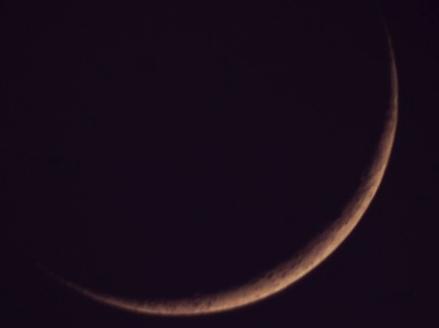
hilalThe next new moon occurs on Monday, 11th March, 2013, at 19:51 GMT. On this day it cannot be seen with the unaided eye in any part of the world.
On Tuesday, 12th March, 2013, it can easily be seen with the unaided eye in North and Central America and in Europe.
For the Muqallideen of Ayatullah ul Uzama Syed Sistani (May Allah Protect him) expect 1st Jamaadi ul Awwal, 1434AH, to be on Wednesday, 13th March, 2013.

For Muqallideen of Marhum Ayatullah Al Khoei (May Almighty Elevate his status) 1st Jamaadi ul Awwal 1434 will be on Wednesday 13th March, 2013

By: admin

Notice of Annual General Meeting

In: General, Meetings

26th June 2012
 
NOTICE OF ANNUAL GENERAL MEETING
As per constitution close 5.4 notice is hereby given that the 2012/1433 Annual General Meeting of the KSIMC of London will be held on Wednesday 18th July at 8.00pm (registration to commence at 7.30pm ) at the Husaini Shia Islamic Centre, Wood Lane, Stanmore, Middlesex HA7 4LQ.
To transact the following:
AGENDA:
  1. Recitation from the Holy Qur’an and English translation thereof.
  2. Confirmation and adoption of the Minutes of AGM held on 20th May 2011
  3. Matters arising on the Minutes of AGM of 20th May 2011
  4. Confirmation and adoption of Minutes of SGM held on 15th November 2011
  5. Matters arising  on the Minutes of SGM held on 15th November 2011
  6. Confirmation and adoption of the Minutes of the EGM held on 2nd June 2012
  7. Matters arising on the Minutes of EGM held on 2nd June 2012.
  8. Presentation and adoption of Accounts for the year ended 31st December 2011 and approval of budget for the following year
  9. Appointment of Auditors
  10. Election of a Trustee as per clause 9.6 of the constitution
  11. Motions of which due notice is given
  12. Motions without notice ( at discretion of the Chair )
  13. Any other Business ( with permission of Chair )
With Salaams and Dua’s
 
Lyakat Jaffer
Hon. Secretary

By: admin

SAFEGUARDING CHILDREN DISCUSSION FORUM AGENDA

In: General

KSIMC LONDON – SAFEGUARDING CHILDREN
DISCUSSION FORUM
“Talking about the Unthinkable”

Date: Friday 18th May 2012

Time: 7.45pm
Venue: Hujjat Centre
Various specialists will be in attendance to answer all your questions

Aim: To establish lessons learnt and explore a way forward in order to create and integrate “safeguarding children” arrangements within the Hujjat Centre – KSIMC of London

Objectives: By the end of the session, you will have achieved the following:
• Reflected on the lessons learnt with regards to safeguarding children arrangements at Hujjat
• Developed an understanding of our responsibilities in terms of child protection
• Discussed what needs to be done in order to ensure the “integration” of safeguarding arrangements into all of our activities at Hujjat and create safe practices, in order to ensure the protection of children within the community (about more than just the paperwork)
• Clarified any issues or concerns with regards to safeguarding arrangements at Hujjat

Audience Profile:

All members and parents, trustees of the Jamaat, volunteers, teachers, youth and children’s workers. Please – no children under the age of 18.

7.45pm    Arrival / Welcome
   
8.00pm    Opening:                   
– Setting the scene / – Ground Rules
                                                   
8.10pm  Current Situation:
– What we know and the lessons learnt
– The role of the Local Authorities  
– The challenge of Child Protection – key facts
               
9.00pm  Salaah

9.30pm  Way Forward: The Start of a Long-haul Journey for Hujjat    
    
– Child Protection – understanding our responsibilities and
 “walking the talk”…..this is about more than just the  paperwork               
– Formation of the Hujjat Safeguarding Committee


10.00pm
  General Q&A Session on Safeguarding Arrangements at Hujjat:
– Ask the Experts…
       
10.30pm    End

By: admin
nawroz

Nowruz – 20th March 2012

In: General

What do our scholars say about this day and its importance?  Ayatullah al-Uzma Makarim Shirazi, in his recent publication, Mafaatih al-Naveen (an updated version of Mafaatih al-Jinaan of Shaykh Abbas Qummi), writes: “In regards to what Islam has to say about Eid-e-Nowrooz, we must state that amongst the scholars, this Eid is debated. Some of the traditions point to the importance of this day as one in which many nations were saved (from perils).”

He goes on to state that, “The Late Allamah Majlisi writes in Zad al-Ma‘aad that, “From a reliable chain of narrators from Mu‘alla ibne Janis it has been narrated that on the day of Nowrooz, he was blessed to be in the presence of Imam as-Sadiq (AS). The Imam asked, “Do you know the status of this day?” Mu‘alla replied, “May I be sacrificed for your sake! This is the day which the Iranians took as a great day. On this day, they send gifts to one another.” The Imam replied, “The act of holding this day in esteem and greatness is due to certain historical events which took place which I will now explain to you.” The Imam then mentioned the following events:

1. Nowrooz is the day when Allah, the High, took the Oath of Allegiance from the souls of all human beings (before their creation) to His oneness, that they would not associate partners with Him and that they would accept and believe in His Prophets and Imams;

2. This is also the day when the flood during the time of Prophet Nuh (AS) subsided and the ark rested on the mountain of Joodi;

3. Nowrooz is also the day when the Messenger of Allah destroyed the idols of the polytheists of the Quraish in the city of Makkah.

4. This was also the day that Prophet Ibrahim (AS) destroyed the idols;

5. Also the day when the Messenger of Allah ordered his companions to pledge allegiance to Ali as the Commander of the Faithful (this is in reference to the Day of Ghadeer which took place on the Eid-e-Nowrooz);

6. it is also the day when the Qa’im from Aale Muhammad (the 12th Imam) will make his advent…”

However, Ayatullah Makarim Shirazi cautions that, “Since Mu‘alla ibne Janis is an individual whom the scholars question (and thus this tradition as well falls under question), for this reason, it is not possible to rely on this tradition.” None the less, he states that this day has Islamic significance, which we need to ensure is marked in an Islamic fashion.  He concludes by stating that the Eid-e-Nowrooz is an Eid of nature in the world of creation; it is the day when winter ends and spring blossoms with its natural life by the command of Allah. It is the time when the leaves of the trees begin to sprout their buds and the flowers begin to bring forth their bulbs in preparation of their blooming; it is a time when a movement towards life takes hold of all of creation and thus we, the believers, should be in harmony with this event of the creation as this is equivalent to being in sync with the tradition (Sunnat) of Allah.

The believers need to ensure that they remove all actions which are ‘cultural’ or ‘traditional’ – even if practiced by Muslims, and to follow the dictates of the Prophet and the Imams. Thus, some of the recommend actions which we should perform on this day include: a ghusl for Eid; wearing clean clothes; applying perfume; fasting, praying the recommended Salat after Salaatul Asr and the various supplications which should be read on this day, some of which are found in Mafaatih al-Jinaan [The Prayer’s Almanac in English by PET].

According to the Holy Prophet (SA) and 6th Imam (AS), the rain water of this month is very useful for curing many ailments.  It is also said that this water causes fertility in women.  So if a childless female drinks this water, she may give birth to a child.  [Mafateehul Jinaan – Pg 639].

Recommended Aa’maal of E’id Nawrooz
 (1) Have a bath.
(2) Put on new or clean clothes and apply perfume.
(3) Keep fast.
(4) Pray a 4 Rak-a’t salaat, after the Z’uhr and A’sr prayers, as under:
In the first Rak-a’t after the recitation of Soorah Al Faatih’ah, recite Soorah Al Qadr 10 times.
In the second Rak-a’t, after the recitation of Soorah Al Faatih’ah, recite Soorah Al Kaafiroon 10 times.
In the third Rak-a’t, after the recitation of Soorah Al-Faatih’ah, recite Soorah Al Ikhlaas 10 times.
In the fourth Rak-a’t, after the recitation of Soorah Al Faatih’ah, recite Soorah Al Falaq 10 times, and Soorah Al Naas 10 times.
(5) Pray other Duas mentioned in Mafati-ul-Jinan and other books.
(6). Ask your hajats.

Source: Mustafa Mawjee

By: admin