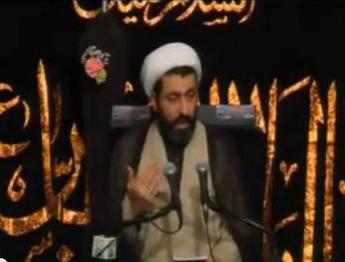
Acknowledgement and prayers for those going for Ziyarat and a request for dua.
Continuing on the theme of ‘Practical advice from the Ahlul Bayt (as), hadith of the 6th Imam: “One of you may say that he is Ghareeb (a stranger or alone) yet the TRUE Ghareeb is the one resides in the land of Shirk (where Islam is not the dominant religion).
This hadith is especially for us who live in a society where majority of the people either don’t believe in Allah or are non-Muslims. It is an honour that Imam is speaking about people like us and remembering his followers in the future
In the view of our 6th Imam (as), there is a land of faith and there is a land of shirk and there is a difference between these lands. It is important to note that the Imam is NOT asking to leave this land and move to the land of faith but he implies there is a role for those Muslims living in these societies
At the time of migration from Mecca to Medina, a man who converted in early days told Prophet (sa) that he is being pressured to leave Mecca and asked if he can stay in Mecca. Prophet (sa) replied to him that as long as you establish prayer and keep away from bad deeds, then live wherever you like.
The key point is the environment should not affect our faith and erode our principles.
One lesson from the hadith is that living in an environment of shirk can make lonely. This was proven through examples.
In our society Materialism pushes us to follow a cycle of buying and consuming materials for pleasure. But upon reflection we realize we are not just a physical reality and hence we should not limit ourselves to physical things. As much as you try you will never be able to attain this world, its pleasures are transient, if this becomes your goal you will never be satiated and you will feel at loss and empty inside. Practical examples cited.
There is a difference between a true believer and a materialist. A true believer lives in the world and acquires possessions and earns a living but AS A MEANS for achieving felicity and happiness for the hereafter. The materialist acquires possessions to fulfill his desires without much thought about the hereafter. Examples given.
If we are blessed with the wealth then we have to think about how we spend it. Having a desire to buy something is not bad but there should be criteria for what we buy and consume. The fundamental criterion is whether we have an attachment of heart to that material good we purchase. On a basic level we should consider that the thing we buy is not haram itself or doesn’t lead to haram. On a secondary level, whether having that good / making that purchase is really needed must be considered. Examples cited.
• Yesterday we discussed about adhering to the principle of justice when dealing with others. The basis on which we operate with others is Ihsaan (kindness) as per the instructions of the Ahlul Bayt (as) • But there is a difference when we choose individuals who will be our close friends and associates; in this case the belief and practice of that individual is of utmost importance • Ayatullah Behjat said that if we spend too much time with “ahlul ghaflah” (those who have no or very little connection with Allah (Swt) in their daily life), we become hardhearted and we will become less inclined to worship God and to follow the footsteps the Ahlul Bayt (as). The exception is in necessary circumstances (such as business or necessary family interactions) or when in the position to guide others. • In summary, we should interact with all, but our HEART should not be inclined and affected by those who are engrossed in sin and we should not spend excessive time with them as they would negatively affect us • We should take the idea of schooling very seriously as the hadith states that a young person is like a ground on which you can carve anything and it will stay. Other traditions emphasize the point about being careful whom young people interact with in a close manner. • The maraaji have drawn the red line for what sort of educational environment is not allowed for our children to partake in • The concept of a Muslim school with a healthy spiritual atmosphere is very important though some may have reservations about this • We need to make an effort by following the guidance of scholars and mujtahids on the principles of ta’leem (education) and tarbiyyah (upbringing) for it is an art and a science. A Muslim school is beyond just a building with Muslim teachers. • In a good Islamic school there is a need to have a good balance of academic excellence (which is of utmost importance) and also creating a Islamic environment for our children. There are few examples of such schools in the west and we can learn from their experiences. • There are a number of common concerns that come up when this topic is discussed which were addressed in turn.
• The Topic for these nights are “Practical Advice from the AHLUL BAYT (AB) for Muslims living in the west” • Todays lecture is a teaser so to speak, to give listeners an insight as to what is to come in the forthcoming nights. • We need to step back and look at their purpose and role of the AB at a theoretical level
The question one often asks “Is Islam universal and relevant in our time?” • According to the well known verse in surah Maidah. “Today I have Perfected for you your religion” meaning the religion is perfect and applicable to today and all times ie perfect at all times • The 5th Imam (as) states- Allah (SWT) the Exalted has not left aside a single thing that is needed but that it was revealed in the Quran and the sunnah • This gives us confidence knowing that we have all the tools of guidance with us • The reason the Holy Quran is timeless and relevant is because it has principles and guidelines which are universal and can be applied in different times. • The Quran needs explanation and clarification which can either be done by the Quran itself or by the holy progeny • The Quran is timeless, its need for clarification is timeless, and this done by HP and AB and hence our need for them is timeless
We sometimes wonder what do the AB know about the modern day? But if we analyse how different is our situation and our lives different from theirs? • If we analyse what we are made up, we are not just a sum total of technology, or advancements in science etc but we are a sum total of a body and a soul which hasn’t changed over time • Also the Fitrah, that innate nature which Allah creates within all human being, is a hard wiring which doesn’t change over time. This is clearly explained in Surah Rum… It guides us towards Allah and our movement towards Him. So how different are we 1400 years later in terms of searching for our goal? • Some examples on how the words and teachings of the AB are relevant more than ever today when it comes to marriage, childraising, and death
The AB are looking for more from us however, than just to consider them relevant. • Look at the Hadith of Unwan al Basri, a student of Anas bin Malik , who came to the 6th imam and wanted to become his student. Imam (as) says to him I am busy. Imam was not being stingy but was teaching us that we have to realize that station of Imam first and his rank before we can take from him • The AB have stated, Travel east and west and you will not find anything that is correct except from us. AB have given us guidelines on how to live our lives in all arenas. And that is their role, they are our guides • Inspirational anecdote that took place recently that demonstrates that AB are seeking those who will take their guidance
It is important to note that when we are looking at the advice of AB it doesn’t mean that this is not covered in HQ. For example look at the example of Asiyah the wife of pharaoh (a women brought in a non muslim/tyrannical society) She is an example that is immortalized the Quran and her entirety of her personality and vision is encapsulated in one dua. O ALLAH GIVE ME A HOUSE IN YOUR PROXIMITY IN PARADISE. She wanted proximity to Allah. She was a queen and had all the material wealth of the world but she wanted something better. She then prays for deliverance from pharaoh a sign of her unwavering stand for truth and justice.
• The topic we are covering is practical advise for Muslims in a minority from the Ahlul Bayt (as) from teachings which are relevant to our situation, living with non-Muslims.
• We should try and benefit from lecturers/ scholars; the minbar is one way of communication. We should also benefit in a less formal environment and try to make the most of these opportunities. Sometimes what we hear is repetition but we shouldn’t perceive that as a negative, it can be treated as a reminder and that can encourage us to practical application.
• We should also partake emotionally in these majalis the best way possible. They are a source of Barakah (blessings) and we are strongly advised by scholars to try and mourn on the Masaib (gham) of Imam Hussain (as) and his family in whatever capacity.
• There is a hadith of Imam Ali which is found also Nahjul Balagha and other sources which is advice to Malik Ahtar (a close companion) on the governance. He guides Malik to feel love in his heart for the people and not to act barbarically. He further says that people are of two types: either your brethren in faith and or peer in humanity/creation
• This hadith clear shows that there is a level of respect one earns just by being a human being. There is a principle of Ahsan (kindness) and A’dl (Justice) for all humans. 6th Imam witnessed a man insulting a person of another religion and rebukes him as that religion is worthy to him
• Holy Quran mentions about those that come from of different religions that if they are not an enemy than you should treat in kindness and justice and Allah loves those who are just
• Justice is part of innate and core beliefs especially as Shias and this should be looked at material and spiritual level. The common idea is that if I am not causing injustice physically to others then that is enough, but there is a higher level of injustice as well and that this doing injustice to oneself
• We perform injustice to ourselves when we follow our base desires without regards to the Shariah and there is always a battle going on between the Aql and the base desires. Committing sin doing is injustice to own self.
• There is a difference between a brother in faith and a peer in humanity but we should have friendly relations to all
• Holy Prophet (sa) in Medina lives with different tribes and different religions and was able to have a working relationship with all of them but still is able to preserve the Muslim identity
• We also need to take care of people with whom we have close relationship. One of the main criteria of choosing close associates is that they are not performing injustice (both material and spiritual) and also not supporting it
• Holy prophet (sa) said famously that whoever wakes up in the morning and is not concerned over the affairs of Muslims is NOT A MUSLIM. Hence we should have a special affinity to a Muslim and we should care for them irrespective of their geographical location
• Sometimes the injustice we perform is in the choice of careers. If we are choosing a career that is not helping the cause of justice, at least we shouldn’t choose something that is going to increase injustice. Also, don’t compromise your religion for wealth and go against your principles. For e.g. avoid being involved in the system of interest and advertising of haram material or alcohol.
These supplications of Imam Zayn al-Ábideen (A) help us understand the spiritual and inner dimension of Islam and our relationship with Allah (swt).
Three lines from Du’a Makarim Al-Akhlaq :
I should like to quote briefly three lines from Du’a Makarimul Akhlaaq, Du’a No. 20 in SahifahAl-Kamilah. This is one of the most beautiful dua’s which we normally recite on the 23rd night of the month of Ramadhan. It is a du’a about the noble moral traits and those acts which are pleasing to Allah (swt). Imam supplicates,
(Allahumma salli ‘alaa Muhammadin wa aalihi ; wakfini maa yashghalunil ihtimamu bihi.)
‘’O Allah, bless Muhammad and his household ; Keep me Occupied with those things which in your estimation are important.
‘’Wast’amilni bima tas-aluni ghadan ‘anhu’’ ‘And employ me in that about which You will ask me tomorrow.’
‘’Wastafrigh ayyami feema khalaqtani lahu’’ ‘’and let me pass my days in that for which You have created me.’’
Let us expound on these three verses. ‘wakfini maa yashghalunil ihtimamu bihi’
Keep me occupied with what is important to me, that is, something useful that I put some effort into cultivating. For example when you grow a plant you have to take great care in nourishing it by watering it and making sure that it is trimmed and receives enough sunlight. This is ‘ihtimam’, anything that blossoms after putting in efforts and attention.
In other words the Imam is advising us to keep ourselves occupied in doing those things which earn the pleasure and ‘ridha’ satisfaction of Allah (swt). Our constant and continued struggle in life must be for the sake of earning satisfaction of none other than Allah (swt).
Anyone who has only one concern, one desire in life and that is, to do anything and everything sincerely for the sake of Allah (swt), Allah (swt) will fill his heart and make him so contented and independent that he will no longer need to seek any help, comfort or confidence from anyone except Allah (swt). This is achieved by those people who have resolved in their life that their only direction is to Allah (swt).
Then Imam says,
‘’wasta’milni bimaa tasaluni ghadan ‘anhu’ ‘’Employ me in that about which You will ask me tomorrow’’.
What does it mean about that which we will be asked tomorrow? According to our ‘ulama’ we will be asked about two things only, about things that we have done and those things which we have failed to do. We will be asked about what we did in all these years of our life that Allah (swt) has given us. Did we serve God’s creation? Did we help the poor and the needy? As Shias, what have we made of the Book of Allah and the ‘seerah’ and the ‘sunnah’ of the Prophet and the A’imma (A)? Have they had any effect on our life? How have we treated our parents, our wives, our children and our fellow human beings?
These dua’s are a journey of exploration, a journey of self-analysis, a journey which involves transformation, a journey of our life, of where we came from and where we are heading to, what steps must we take in order to arrive at the destination required by Allah (swt), a journey which ultimately ends with success and salvation.
‘’Wastafrigh ayyami feema khalaqtani lahu’’ ‘’and let me pass my days in that for which You have created me.’’
That is, let every day of my life be a testimony that I have fulfilled the purpose of my existence in this universe which is to serve none other than Allah(swt) as Allah says, ‘wa maa khalaqtul jinna wal insa illah liya’budoon.’ ‘I have not created jinn and men except that they may worship me, they may serve Me.’(Surah Az-Zaariyaat – 51:56).
Let us see what Imam Redha (A) says about worship ‘ibaadah’. He says,
‘’Laysatil ‘ibaadatu kathrata-s-siyami was-salaati’’ ‘’Worship is not about fasting or praying much’’
‘’wa innamal ‘ibaadatu kathratu-t-tafakkuri fi amrillah’’ ‘’Rather worship is to reflect much on the affairs related to Allah(swt)’’
(Tuhaf al-‘uqool, p. 442).
What is important is to reflect upon the purpose of our existence which is to fulfil the commands of Allah(swt) according to the Holy Qur’an and the teachings of Ahlul Bayt (A).
In Surah Al-Imran, Surah No. 3 Ayah No. 191. In this Ayah, Allah (swt) describes those people who have understood and fulfilled the purpose of their existence.
‘’allazina yazkurunllaha qiyaman wa qu ‘oodan wa ‘alaa junubihim wa yatafakkaruna fi khalqi-s-samaawati wal ardhi’’ ‘’Those who remember Allah standing and sitting and lying on their sides and reflect on the creation of the heavens and the earth.’’
These people think deeply about the creation of the heavens and earth and so understand the purpose of their creation on this earth. They do not pass their time in useless pursuits and vain pastimes. And they say,
‘Rabbana maa khalqta haaza baatilan subhanaka faqina ‘azabannaar’ ‘’Our Lord! You have not created all this in vain. Glory be to You; save us then from the chastisement of the Fire.’’
These are the people who with tears in their eyes call on their Lord with ‘’tadharruan wa khufyah’’ humility and in private (7:55) saying, ‘’You have not created this universe for no reason.
Allah (swt) is calling upon us to live a meaningful life filled with good deeds. Otherwise, we are ‘mayyitoon’ we are spiritually dead. We are just carrying on in life that has no meaning and no purpose.
Imam Ali (A) put all his thought and attention to none other than Allah (swt). He said,
‘’maa ra aytu shay-an illa ra aytu-Llaha qablahu, wa ma’hu wa ba’adahu’’ ‘’I never saw a thing but saw Allah before it, with it and after it.’’
Let us pray to Allah (swt) to grant us ‘tawfiq’ to understand the purpose of our creation and carry out the commands of Allah (swt) and let us end with a prayer of our Prophet(saw)
‘’Ilahi laa takilni ila nafsi tarfata ‘aynin abadan’’ ‘’My God! Do not ever leave me by myself even for a moment’’
What guarantee do we have that we are going to be alive today. Go and visit the graveyards and see how many of our relatives and acquaintances whom we used to know and love have passed away. What is going to remain with us are our deeds that we have sent forth for the Hereafter. In Surah Al-Nahl (16:96) Allah(swt) says, “What is with you passes away, i.e. must vanish and what is with Allah i.e. the good deeds that we send forth to Allah (swt) will remain. Indeed, we shall give reward those who are patient according to the best of what they did.”
And in Sermon No. 238 in Nahjul Balagha, Imam Ali(a.s.) cautions us that we should collect provision for the next world by performing good deeds before our death. He says, “Perform good acts while you are still alive, and while the books are open (for recording your actions); while the sinner is still being given hope before the light of action is extinguished; and before the time expires and our life ends, and the door of ‘tawba’ is closed.”
Death is just a transfer from one home to another. On the Day of Ashura, Imam Husain (a.s.) said to his companions, “Death is nothing but a bridge over which you pass from this world of difficulties and distress towards a vast heaven of eternal happiness. Who amongst you does not like to migrate from the worldly prison to the heavenly palace? And as for your enemies, it is like migrating from the palace towards the prison.”
Remembrance of death: If there is anything that kills unlawful desires of our soul, it is remembrance of death. By constantly remembering death we are actually plucking out the roots of our negligence and preparing ourselves for the appointment with Allah(swt). When you frequently remember death , your preoccupation with this fleeting world will diminish and the fire of greed will be extinguished. According to Mulla Muhsin Fayd Kashani, the Prophet’s saying, ‘’An hour’s contemplation is better than a year’s worship,’’ is very much about the remembrance of death. When a person contemplates about death his exaggerated view of the world is dissolved and he strives harder for the Hereafter.
The believers are those who remember death most and are the most prepared for it. When the Prophet(saw) said, “Increase the ‘zikr’ the remembrance for the demolisher of desires” he was asked “What is the demolisher of desires?” He said, ‘death’
One way of reviving the remembrance of death in our hearts is to visit graveyards and attend the sick.
Categories of people : People fall under three categories as far as remembrance of death is concerned.
Those who do not remember death: The first group of people are those who are possessed by the comforts and the glitter of this world whose deeds are not good. These are the ones who take death lightly as if they are exempted from death. They are the ones about whom Allah (swt) says in Suratul Jumu’a (62:8) “Say, indeed the death that you flee from will certainly overtake you.”
When our time comes to leave this temporal world, we cannot defer it by a single hour nor advance it
The second group of people are those who repent and remember death abundantly to instil fear and awe in their hearts. These are people who are always afraid that death might seize them before they have made the necessary preparations. They do not actually detest death or meeting Allah (swt). Rather they fear they have lost the opportunity to meet Him due to their failures and shortcomings in this world.
The third group of people are those who are not afraid of death. Rather, they remember death continuously, for what is their utmost desire and wish is their appointment to meet their beloved, for the lover always desires to meet his beloved. This group pray to Allah (swt) saying, “O Allah, keep me alive as long as life is ‘khair’ good for me, and take me away when death is better for me (Sunan Abu Dawood No. 3108)
Yet higher than this third group are those who entrust their entire affair to Allah (swt). They love best what Allah loves best. Their love and devotion to Allah(swt) brings them to the level of satisfaction with the divine. They are the example of ‘’mootu qabl ‘anta mootu’’. ‘’Die before you die.’’
In Hadith Al-Qudsi, Allah (swt) says,
“I wonder how a person can be happy when he is certain of death.” “and I wonder how a person who is certain of the Day of Reckoning (The Day of Judgement) but still accumulates wealth.”
Where are the huge treasures accumulated by Shaddad, Fira’wn and Qaroon ? They have all left them behind and are themselves rotting in hell.
“I wonder at a person who is certain of going into the grave, but still smiles without concern.” “I wonder at a person who is certain of the Hereafter and its Bounties but he still rests.” “I wonder at a person who cleans him/herself with water, but does not cleanse his heart.” “I wonder at a person who knows that Almighty Allah is aware of his actions, but still commits sins.” “I wonder at a person who knows that he/she will die alone, go into the grave alone, give accounts alone, but is still totally engrossed with people who will not be able to help him/her.”
Ihtidhaar: The period of time just before death is known as ‘ihtidhaar’ and the person who is on his deathbed is referred to as ‘muhtadhir’. It is recommended to help the dying person recite ‘’La ilaha illallah’ for Imam Ja’far al-Sadiq (a.s.) has said, “Whoever recites ‘La ilaha illallah’ during his dying moment will go to Jannah.” It is also recommended to help the dying person recite and understand the ‘kalimah’ and the names of the 12 Imams. It is also mustahab to recite before the dying person Suratu Yaseen, Surah Saffaat, Ahzaab, Ayatul Kursi, the 54th ayah of Suratul A’raaf, And the last three ‘aayaat of Suratul Baqarah which starts with ‘Lillahi maa fis-samawaati wal ardh and ends with ‘anta mawlana fansurna ‘alal qawmil kaafirin.’’ Also, it is highly recommended to recite audibly as many times as possible du’a e adeelah near the dying person during the time of ‘ihtidhar’ if the dying person is not able to recite it for it contains the fundamentals of imaan. Lastly, help the dying person to recite the following du’a of forgiveness and also familiarise yourself with these recitations during your lifetime. This is a du’a for forgiveness.
“Allahummaghfir liyal kathira min ma aa’seek” “O Allah, forgive me for the many sins commited against you.”
“Waqbal minnil yaseera min ‘taa ‘atik” “and accept the few good deeds in your obedience.”
“Ya man yaqbalul yaseera wa ya’fu ‘anil katheer” “O He who accepts the few good deeds and forgives the many sins.”
“Iqbal minnil yaseer, wa’fu ‘annil katheer” “Accept from the few good deeds and forgive my many sins.”
“Innaka antal ghafoor” “Surely, you are the forgiver.”
“Allahumar hamni fainnaka raheem.” “O Allah ! Have mercy on me for You are forever Merciful.”
We seek forgiveness of Allah (swt). We pray to Allah (swt) that at the time of death we die with a’maale salihah. Wa aakhiru da’wana anilhamdu lillahi rabbil ‘aalameen.
5. Unfortunately mankind has never been able to establish social justice, though the messengers delivered the message properly and did their best. We cannot even claim that we are anyhow close to the point of witnessing universal social justice. Indeed, from hadiths about end of the time, we can discover that injustice has been spreading and the earth will be filled with injustice before the advent of Imam Mahdi (a). Of course, when people are ready to undertake their responsibility and follow Imam Mahdi (a) Allah (swt) will give him permission to start the last stage of administering and establishing social justice and equity. The world would not come to an end unless the goal for which all the messengers have come can be achieved. 6. Prophet Ibrahim (a) played a key role in divine plan for humanity. 7. Prophet Ibrahim (a) not only rebuilt Ka’bah, but also he laid the foundation for a God pleasing community, “a submissive nation (2:128).” The Qur’an says: “As Abraham raised the foundations of the House with Ishmael, [they prayed]: ‘Our Lord, accept it from us! Indeed You are the All-hearing, the All-knowing. ‘Our Lord, make us submissive to You, and [raise] from our progeny a nation submissive to You, and show us our rites [of worship], and turn to us clemently. Indeed You are the All-clement, the All-merciful. ‘Our Lord, raise amongst them an apostle from among them, who should recite to them Your signs, and teach them the Book and wisdom, and purify them. Indeed You are the All-mighty, the All-wise.’ (2”127-129) 8. Allh (swt) in three places in the Qur’an (2:151; 3:164; 62:2) confirms that He actually sent that messenger to the people of Mecca to recite to them the Qur’anic verses, to purify them and to teach them the Book and wisdom. 9. Despite all the efforts of Prophet Muhammad (s) and previous messengers and despite the fact that there have always been many good and pious individuals, so far no perfect Islamic nation or community has been established. Beauty and attraction of a community that exhibits Islamic values is by far much more greater than those of exemplary individuals. Great love of people for personalities like Allamah Sayyid Mahid Bahrul-Ulum (d. 1212 AH) and Ayatollah Muqaadas Ardebili (d. 993 AH) cannot be compared to the love that they would have if they see a virtuous community. Muslims from other schools of Islam and non-Muslims will all love a community that would be exhibit personal and social values of the Ahlul Bayt (a) and like to become part of it. 10. Imam Mahdi’s success depends on having such a community with him. When Imam calls for universal justice he should be able to show to the people of the world that we have already achieved among ourselves what we preach.
In the third lecture which was delivered on the 7th November 2013, some of the points discussed are as follows: 1. The discussion about the following verse continued: “Thus We have made you a middle nation that you may be witnesses to the people, and that the Apostle may be a witness to you. And We did not appoint the qiblah you were following but that We may ascertain those who follow the Apostle from those who turn back on their heels. It was indeed a hard thing except for those whom God has guided. And God would not let your prayers go to waste. Indeed God is most kind and merciful to mankind. ” (2:143) 2. It was explained that a very important and central requirement for the Muslim community is that they should be a middle or balanced community, as interpreted by Allahmah Tabataba’i in Al-Mizan and Ayatollah Makrin Shirazi in Tafsire Numuneh. 3. It was explained that to go into extremes is a sign of ignorance, as Imam Ali (a) said. 4. One important aspect of this balance is to have emotions but at the same time remain rational. In other words, we should have emotions, but they should be regulated and guided by our reason, since it is the reason (‘aql) which is the internal hujjah of Allah (swt), as Imam Kazim (a) said. 5. When Muslims were asked to shift to the new direction for their prayer some found it very very difficult, because they were emotionally attached to the old one. In the above verse, Allah (swt) says that indeed one reason for asking them initially to say their prayer to one direction and then to the other was to test them and it was a very difficult test: “It was indeed a hard thing except for those whom God has guided.” 6. We have to do all our deeds like fasting, praying, ziyarah, etc. according to Allah’s will and not because we are used to doing them or we feel bad if we don’t do them like those who fast despite the fact they are traveling and fasting harms their health. 7. Significance of emotional unity with the Ahlul Bayt (a) was mentioned. We should be happy on their happy occasions and we should be sad on their sad occasions. It is especially important to grieve when they are in grief; otherwise anyone can smile or laugh with you when you are happy. It is only when someone is really close to you that he or she can cry over your problems. 8. Imam Rida (a) told the son of Shabib: “O son of Shabib! Whenever you are going to cry try to cry for Husayn ibn Ali because he was slaughtered like … and with him, 18 men of his family were killed who had no similar on the earth… O son of Shabib! If it makes you happy to be with us in the highest ranks of heaven be sad for our sadness and be happy for our happiness and you should have our wilayah, because if a person loves even a stone All will resurrect him with that stone.” (Was’ail al-Shi’a, vo. 14, p. 503) 9. So emotional attachment to the Ahlul Bayt (a) is very important, but more important than this is to have their wilayah and that is to follow them. I can feel very sad and even cry when I see a poor person or an orphan or war victims but to follow them is another issue. 10. With respect to Ahlul Bayt (a) we should be emotionally connected to them, but we must also follow them. Our life style, our family life, our prayer, our relations all should resemble theirs. 11. Imam sadiq (a) said to Misma‘ son of ‘Abd al-Malik: “Do you remember what was done to him, referring to Imam Husayn (a)?” He said: Yes. Imam asked: “Do you feel very sad for him?” He replied: Yes, by Allah. My tears come to the extent that my family see its impact on me and I refuse to eat till it can be noticed on my face. Imam said: “May Allah’s mercy be on your tears! You are one of those would be counted among those who lament for us. They rejoice when we are happy and grieve when we are in grief. Beware that at the time of your death, you will find my fathers present and they will ask the angel of death to be kind with you and the good news that they will give is even greater. The angel of death will have more tenderness and stronger mercy for you than a loving mother for her child… No one had cried out of mercy for us and what [tragedies] we underwent except that he will receive divine mercy before his tears come out of his eyes. And if his tears flow on his cheek and one drop of his tears drop in hell it will extinguish the heat of the hell.” (Was’ail al-Shi’a, vo. 14, p. 508) 12. Thus, we should strengthen our ties with the Ahlul bayt (a) emotionally but also try to increase our ma’rifah and knowledge of them and do our best to resemble them and not to contradict by our deeds what they did or said.
Now we have to do two things:- 1) Good deeds 2) Become a Mu’min According to the Qur’an the definition of a Mu’min in Surah Anfal verses 2, 3 and 4 “A Mu’min is one whose Eimaan will increase when he hears verses of Qu’ran and is one who recites his Salat, does enfaq from whatever Allah (SWT) has given him, and has faith in Allah (SWT Tawakkal Allalah.”
So the moral of the first majlis is one has to do good deeds to become successful and to do good deeds one must ask Taufeeq from Allah (SWT So our first dars is ask for “Taufeeq“
There are numerous events that have occurred in the history during this month. Some of them are as follows: Births of: Imam Ali (as) – Year 30 of ‘Aamul-Feel; Imam al-Baqir (as) – 57 AH; Imam al-Jawad (as) – 195 AH & Sayyida Sakinah bint al-Husayn (as). Martyrdom of: Imam al-Hadi (as) – 254 AH & Sayyida Zaynab (as) – 62 AH. Other events: Be’thah (Proclamation of Prophethood) – 13 BH, Me’raj (The ascension of the Holy Prophet (saww) to the heavens), the Quibla was changed from Quds to Makkah – 2 AH, conquer of Khaybar by Imam Ali (as) – 7 AH, Ja’far bin Abi Talib (as) returned from Ethiopia, the battle of Tabook was fought in the year 9 AH, death of Abbas bin Abdul-Muttalib & Hazrat Abu Talib (as), Ibrahim, son of the Holy Prophet (saw) from Maria Qibtiyya died at the age of 18 months on 18th Rajab 10 AH and Imam Husayn (as) departed from Madinah on 28th Rajab 60 AH
RECOMMENDED ACTS OF RAJAB Fasting: According to Imam al-Kadhim (as), Rajab is the name of the river in paradise which is whiter than milk and sweeter than honey. Those who fast in this month will drink from that river. It is also mentioned in a Hadeeth that whoever fasts for one day of this month: Earns the pleasure of Allah (SWT); Safeguards from the wrath of Allah (SWT) & and a door from the doors of Jahannam is shut for him.
Istighfar: The Holy Prophet (saww) has said, “Rajab is the month for seeking forgiveness, so seek forgiveness from Allah (SWT)”. It is highly recommended that one should recite the Tasbeeh of ASTAGHFIRULLAHA WA AS-ALUHUT-TAWBAH (I seek forgiveness from Allah and ask Him to grant me forgiveness) – as many times as possible. Sadaqah: Giving ‘Sadaqah’ (charity/alms) is also highly recommended particularly for those who are unable to fast for whatever reason.
Laylat al-Raghaib: This is a special prayer performed on the eve of the first Thursday of Rajab. The Holy Prophet (saww) has recommended this prayer to us and the advantages are: Forgiveness of great many sins, Safety from troubles of the grave on the first night of burial and Shelter on the day of resurrection.
Why does man do TAKABBUR? Why is man proud, boastful and arrogant? Why does he tend to consider himself better and superior over others? One could think of many reasons such as wealth, knowledge, strength, power, fame, influence and even connections with the powerful that makes one arrogant. All these are external and perishable elements. If man allows them to influence his behaviour than he is foolish. He has committed an act that is KHILAAFUL-‘AQL (against his intellect). In the days of one of our Imams (as), a person went hunting and managed to kill a lion. He then removed the skin of the lion and wore it on his self and returned to the city Proud over his achievement. He walked boastfully as people gathered to cheer him. Imam (as) inquired as to what was happening. He (as) was informed that so and so had killed a lion and wore its skin. Now he is bragging about it and people are cheering him. Imam (as) smiled and said, “Think of it! If this skin did not survive on the body of its rightful owner, what makes this man think that it will survive on his body?” Wealth, fame, influence, power, connections – all these are external and perishable elements. If one is proud because of them, he is a fool!
THE REAL CAUSE OF TAKABBUR
The real cause of TAKABBUR is one and only one and that is feeling of ‘Inferiority Complex’ within himself. Because he does NOT have true and notable humanly attributes that are praise able, he is desperately seeking attention by way of leaning on external elements. Imam Ja’far ibn Muhammad as-Sadiq (as) has said: “A person is arrogant and tyrannical only as a result of a (source of) disgrace he has in himself”. (Al-Kaafi)

 By:
By: